

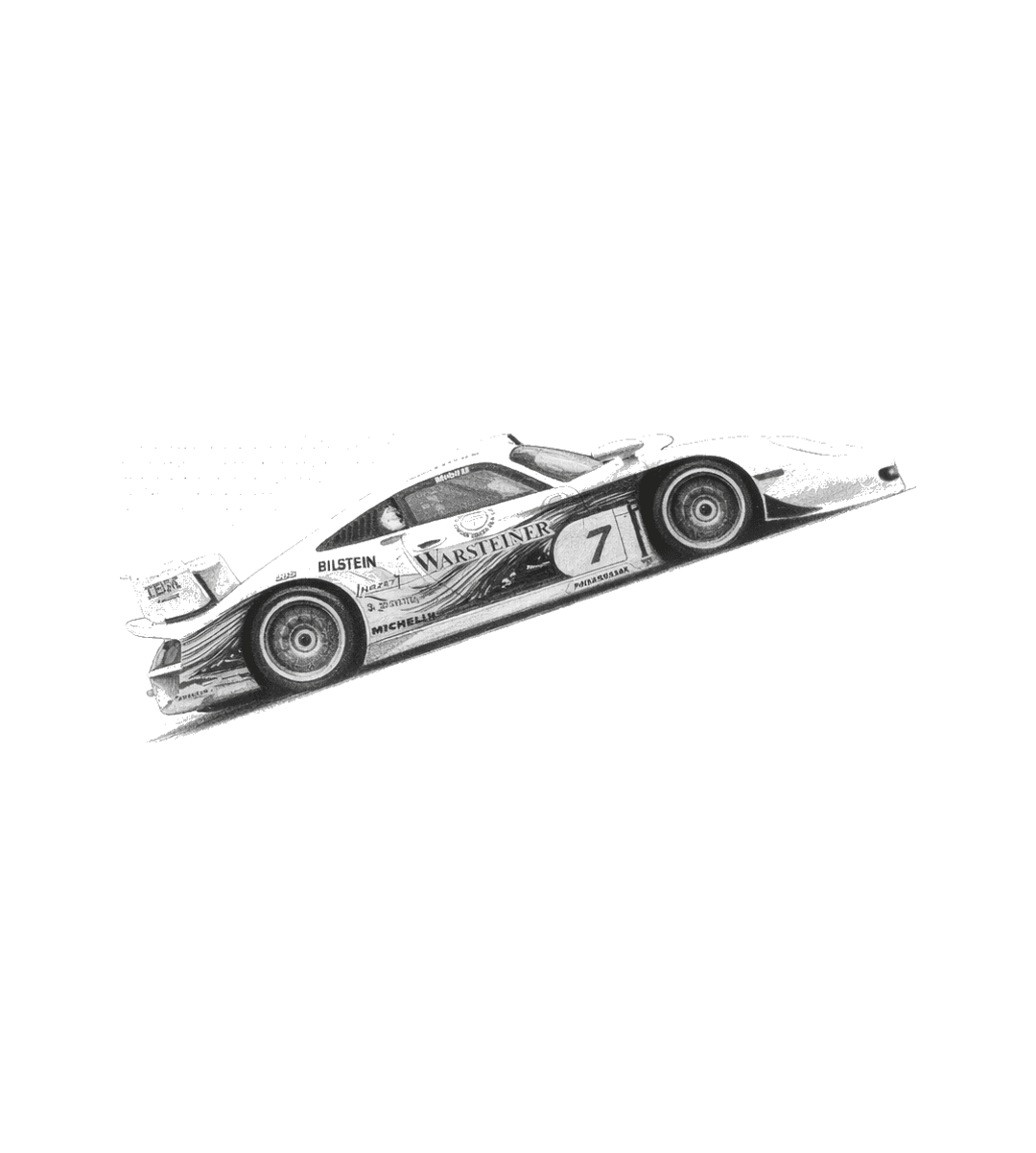
Porsche 911 GT1 Evolution — pencil illustration

Porsche 911 GT1 Evolution · 1996

GT1-101

Representing a paradigm shift in factory engineering, Chassis GT1-101 captures the absolute zenith of the mid-1990s GT1 racing renaissance. Combining its milestone class triumph on its Le Mans debut with an uncompromised structural pedigree, it stands as an epochal masterpiece within the catalog of elite automotive assets.

Reference

Q1328962

Model
Porsche 911 GT1
Designer
Tony Hatter

Reference data from Wikipedia · Q1328962 · CC BY 2.0

Last known public sale

Private placement

Public history

  1. Regulation Exploitation & Design Genesis

    Developed expressly to contest the newly formed GT1 category of international sports car racing, the Porsche 911 GT1 upended traditional sports car manufacturing. Rather than tuning an existing road car to meet racing parameters, Porsche designed a purpose-built, mid-engine competition machine from scratch, later building a nominal run of street-legal Straßenversion examples solely to satisfy mandatory FIA homologation regulations.

  2. Structural Hybridization & Powertrain

    To satisfy stringent frontal impact safety testing, engineering director Norbert Singer implemented a hybrid chassis structure: the front clip utilized a modified production 993-generation steel monocoque, which was mated directly to a rear tubular steel subframe. Power was delivered by a water-cooled, 3.2-liter twin-turbocharged flat-6 powerplant. Breathing through mandatory air restrictors, it generated 592 horsepower, designating this layout as the first mid-engine car to officially bear the 911 moniker.

  3. The Evolution Upgrades

    For the 1997 racing campaign, Porsche introduced the "Evolution" package to counter the pace of newer GT1 entries. The upgrade brought extensive aerodynamic reshaping, highlighted by a wider front track, revised rear bodywork tunnels for downforce generation, and a shift to 996-generation style front headlamps. These modifications shaved drag coefficients while optimizing high-speed front-axle stability, establishing the variant as the absolute visual and mechanical bridge across Porsche's peak endurance racing eras.

Model history drawn from Wikipedia · Q1328962 · CC BY 2.0

This chassis

Factory Campaign & Le Mans Debut

Constructed by Porsche Motorsport AG as an official factory entry. Campaigned by Hans-Joachim Stuck, Thierry Boutsen, and Bob Wollek at the 1996 24 Hours of Le Mans — 1st in GT1, 2nd overall. Model-class factory campaign record applied — exact chassis ledger fragment not yet indexed in RacingSportsCars.
BPR Global GT Series Campaign

Discovered via model-class endurance registry cross-reference: factory GT1 entries contested the inaugural BPR Global GT Series and successor FIA GT Championship seasons, establishing the 911 GT1 as the category benchmark before privateer Evolution cars assumed front-line duty.

Evolution Specification Refit

Chassis cycle aligned with Porsche's Evolution package — wider front track, revised rear downforce tunnels, and 996-generation headlamp treatment — bridging the 1996 homologation car and the ultimate 1998 Le Mans-winning specification.

Retirement & Collection Stewardship

Post-factory campaigning, chassis enters private collector stewardship. Provenance continuity flagged for auction-archive validation — last public placement status tracked in market discovery layer.

Racing pedigree

24 Hours of Le Mans (1996)

Event
64th Grand Prix d'Endurance les 24 Heures du Mans
Driver
Hans-Joachim Stuck · Thierry Boutsen · Bob Wollek
Status
1st in GT1 Class / 2nd Place Overall
Context
Official Porsche AG factory entry debuting the radical mid-engine layout.

BPR Global GT Series (1996–1997)

Event
BPR Global GT Series / FIA GT Championship
Driver
Hans-Joachim Stuck · Thierry Boutsen · Bob Wollek
Status
Factory Porsche AG squad — model-class campaign
Context
Series identified via registry cross-reference; driver roster resolved from factory entry list.

Explore more